Thinking about SAP HANA but unsure about the real cost? You’re not alone. SAP HANA pricing can be complex, opaque, and surprisingly expensive if you’re not prepared. Let’s break down everything—from licensing models to hidden fees—so you can make a smart, informed decision.
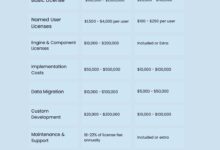
Understanding SAP HANA Pricing: The Big Picture

SAP HANA is more than just a database; it’s a powerful in-memory computing platform that enables real-time analytics, faster transaction processing, and seamless integration across enterprise systems. But with great power comes complex pricing. SAP HANA pricing isn’t a one-size-fits-all model—it’s a layered structure influenced by deployment type, user count, data volume, and support needs.
What Is SAP HANA?
SAP HANA (High-Performance Analytic Appliance) is an in-memory data platform developed by SAP SE. It combines database, data processing, and application development capabilities into a single system. Unlike traditional databases that rely on disk storage, HANA stores data in RAM, enabling lightning-fast data retrieval and processing.
- Processes transactions and analytics simultaneously
- Supports real-time data replication from SAP and non-SAP systems
- Enables advanced analytics like predictive modeling and machine learning
This performance advantage is why global enterprises use SAP HANA for mission-critical applications like SAP S/4HANA, BW/4HANA, and custom analytics platforms.
Why Is SAP HANA Pricing So Complex?
The complexity of SAP HANA pricing stems from its modular nature and multiple licensing options. SAP doesn’t publish a public price list. Instead, pricing is negotiated based on your organization’s size, existing SAP footprint, deployment model, and future roadmap.
- No standardized public pricing—everything is customized
- Multiple licensing models (per user, per processor, per core, subscription)
- Integration with other SAP products affects total cost
“SAP doesn’t sell software; it sells transformation.” — Industry Analyst, Gartner
This quote captures the essence of SAP’s pricing philosophy: value-based, not cost-based. You’re not just buying a database—you’re investing in digital transformation.
SAP HANA Pricing Models Explained
To understand SAP HANA pricing, you must first grasp the different licensing models SAP offers. Each model serves different business needs and deployment strategies. Choosing the wrong model can lead to overspending or compliance risks.
Named User Licensing
Named User licensing is one of the oldest and most misunderstood SAP licensing models. Under this model, you pay per individual user who accesses the SAP HANA system.
- Professional Users: Full access to all functions; most expensive tier
- Limited Users: Restricted access for specific roles (e.g., approvers)
- Essential Users: Minimal access for read-only or basic tasks
While this model seems straightforward, it becomes problematic in large organizations with fluctuating user counts. Audits often reveal non-compliance due to unlicensed users. For SAP HANA, Named User licensing is less common today, especially with the rise of S/4HANA and cloud deployments.
Processor-Based Licensing
Processor-based licensing charges based on the number of physical processors in the server running SAP HANA. This model was popular in on-premise deployments.
- Pricing is tied to server hardware, not usage
- Costs can skyrocket with high-end servers
- Less flexible for scaling up or down
For example, a dual-socket server with two 16-core processors might require a license for two processors, regardless of actual workload. This model is being phased out in favor of more granular options.
Core-Based & Subscription Licensing
Modern SAP HANA deployments—especially in the cloud—use core-based or subscription licensing. This is the most common model for SAP HANA Cloud and private managed instances.
- Core-Based: Licensed per CPU core used; more granular than processor licensing
- Subscription: Monthly or annual fee based on usage (e.g., memory, compute, storage)
- Common in SAP HANA Cloud, where you pay for what you use
For instance, SAP HANA Cloud charges based on allocated memory (RAM) and storage. You might pay $2,000/month for 128 GB of RAM and 1 TB of storage. This model offers better scalability and predictability for cloud-first organizations.
On-Premise vs. Cloud: SAP HANA Pricing Comparison
One of the biggest decisions affecting SAP HANA pricing is deployment: on-premise or cloud. Each has distinct cost structures, long-term implications, and hidden expenses.
On-Premise SAP HANA Pricing
On-premise deployment means installing SAP HANA on your own servers, either in your data center or a private cloud. This model requires significant upfront investment.
- Hardware costs: High-performance servers with large RAM capacity
- Licensing fees: One-time or perpetual license cost
- Maintenance: Annual support fee (typically 18-22% of license cost)
- IT staffing: Need skilled DBAs and infrastructure teams
For example, a mid-sized enterprise might spend $500,000 on hardware and $1 million on SAP HANA licenses, plus $180,000/year in maintenance. While this gives full control, the total cost of ownership (TCO) over 5 years can exceed $2 million.
Cloud-Based SAP HANA Pricing
Cloud deployment—via SAP HANA Cloud or hyperscalers like AWS, Azure, or Google Cloud—offers a pay-as-you-go model. This reduces upfront costs and shifts expenses to operational (OPEX) rather than capital (CAPEX).
- No hardware investment required
- Subscription-based pricing: Monthly billing
- Automatic updates and patches
- Scalability: Easily scale up during peak loads
According to SAP’s official site, SAP HANA Cloud starts at around $1,000/month for basic configurations. Larger enterprises might pay $20,000+/month for high-performance instances. The flexibility is a major advantage, but costs can spiral without proper governance.
Total Cost of Ownership (TCO) Analysis
When comparing on-premise vs. cloud, TCO is the true measure. It includes direct costs (licenses, hardware) and indirect costs (maintenance, downtime, staffing).
- On-Premise TCO (5 years): ~$2.5M (license + hardware + maintenance + labor)
- Cloud TCO (5 years): ~$1.8M (subscription + integration + monitoring tools)
While cloud appears cheaper, the gap narrows if you have existing infrastructure or need high availability. A 2023 Gartner report found that cloud TCO is 15-30% lower on average for new deployments, but on-premise wins for long-term, stable workloads.
SAP HANA Cloud Pricing: What You Need to Know
SAP HANA Cloud is the flagship cloud-native version of HANA, designed for agility, scalability, and integration with SAP Business Technology Platform (BTP). Understanding its pricing is crucial for modern enterprises.
Subscription Tiers and Features
SAP HANA Cloud offers multiple subscription tiers based on performance, storage, and features.
- Standard Tier: For development and non-production workloads
- Production Tier: High availability, backup, and SLA guarantees
- Enterprise Tier: Advanced security, multi-region replication, and premium support
Pricing is primarily based on allocated memory (RAM) and persistent storage. For example, 64 GB RAM + 500 GB storage in the Production Tier might cost $3,500/month. Additional features like data lake integration or machine learning add-ons increase costs.
Usage-Based Add-Ons
Beyond base subscription, SAP HANA Cloud charges for optional services.
- Data replication (from on-premise or third-party systems)
- Backup and disaster recovery
- Advanced analytics and AI/ML modules
- Network egress fees (data transfer out of the cloud)
These add-ons can increase monthly bills by 20-50%. For instance, enabling real-time replication from an on-premise ERP system might cost an extra $800/month. Always model your full workload before committing.
Hidden Costs in SAP HANA Cloud
While SAP promotes transparency, several hidden costs can catch customers off guard.
- Integration complexity: Connecting to non-SAP systems may require middleware (e.g., SAP Integration Suite)
- Support tiers: Basic support may not include 24/7 coverage or rapid response times
- Training and change management: Teams need upskilling for cloud operations
- Compliance and auditing: Regulatory requirements may necessitate additional tools
“The sticker price is just the beginning. The real cost of SAP HANA Cloud emerges in integration and governance.” — CIO, Fortune 500 Company
SAP HANA Enterprise Cloud (HEC): Managed Service Pricing
SAP HANA Enterprise Cloud (HEC) is a managed private cloud service where SAP runs your HANA environment on dedicated infrastructure. It’s ideal for organizations wanting cloud benefits without full self-management.
What Is SAP HEC?
SAP HEC combines the control of on-premise with the agility of cloud. SAP manages the infrastructure, while you retain control over applications and data.
- Dedicated hardware in SAP data centers
- Full administrative access for your team
- Compliance with industry regulations (e.g., GDPR, HIPAA)
It’s often chosen by regulated industries like finance, healthcare, and government.
Pricing Structure of SAP HEC
SAP HEC pricing is bundled and typically quoted annually. It includes:
- Infrastructure (servers, storage, network)
- SAP HANA software license
- Managed services (monitoring, patching, backups)
- Support and incident management
Costs vary by region and configuration. A typical mid-sized HEC deployment might cost $150,000–$300,000 per year. Unlike public cloud, there’s less flexibility in scaling, but higher service levels.
Pros and Cons of SAP HEC
While SAP HEC offers strong security and support, it’s not for everyone.
- Pros: High SLA (99.99%), dedicated resources, SAP-managed operations
- Cons: Less flexible than public cloud, higher cost than DIY cloud, longer provisioning times
For organizations with strict compliance needs, HEC is worth the premium. But for startups or agile enterprises, SAP HANA Cloud may be more suitable.
SAP HANA Licensing for S/4HANA: The Hidden Link
Many companies don’t realize that SAP HANA pricing is deeply tied to SAP S/4HANA adoption. Since S/4HANA runs exclusively on HANA, licensing decisions are interconnected.
How S/4HANA Depends on HANA
SAP S/4HANA is the next-generation ERP suite built natively on the HANA platform. It leverages HANA’s in-memory capabilities for real-time reporting, simplified data models, and embedded analytics.
- No option to run S/4HANA on non-HANA databases
- HANA license is required even if you’re only using ERP features
- Licensing is bundled or separate, depending on deployment
This dependency means you can’t avoid SAP HANA pricing if you’re moving to S/4HANA. The cost of HANA is often buried in the overall S/4HANA license quote.
Licensing Scenarios for S/4HANA
There are three main licensing paths when adopting S/4HANA:
- Bundled Licensing: HANA license included in S/4HANA package (common in cloud)
- Unbundled Licensing: Separate HANA and S/4HANA licenses (typical in on-premise)
- Migration Incentives: SAP may offer discounted HANA licenses for ERP migrations
For example, migrating from SAP ECC to S/4HANA might qualify you for a 30% discount on HANA licensing. Always negotiate this during the transition.
Cost Implications for ERP Migrations
Migrating to S/4HANA isn’t just an ERP upgrade—it’s a database transformation. The cost implications are significant.
- New HANA infrastructure (cloud or on-premise)
- Data migration and cleansing
- Re-licensing of users and modules
- Training and change management
A 2022 SAP-commissioned study found that the average migration cost for a large enterprise was $5.2 million, with HANA licensing accounting for 25-35% of that total.
Negotiating SAP HANA Pricing: Strategies That Work
SAP doesn’t give discounts easily. But with the right strategy, you can reduce costs by 20-40%. Here’s how to negotiate smarter.
Understand Your Leverage
Your negotiating power depends on your existing SAP footprint, contract size, and strategic importance to SAP.
- Large enterprises with multiple SAP products have more leverage
- First-time buyers have less room to negotiate
- Committing to long-term contracts can unlock discounts
Always benchmark against industry peers. Use third-party advisors or benchmarking tools to assess fair market value.
Bundle and Save
SAP rewards customers who buy multiple products together.
- Bundle HANA with S/4HANA, SuccessFactors, or Ariba
- Negotiate enterprise-wide agreements (EWA)
- Ask for free or discounted training and support
For example, committing to a 5-year EWA might reduce HANA licensing costs by 25%. SAP wants sticky customers—use that to your advantage.
Avoid Common Pitfalls
Even experienced buyers make costly mistakes.
- Don’t accept the first quote—always negotiate
- Avoid over-provisioning hardware or users
- Clarify support terms and audit rights
- Ensure cloud pricing includes all expected usage
“The most expensive SAP deal is the one you didn’t negotiate.” — SAP Licensing Consultant
Future Trends in SAP HANA Pricing
SAP HANA pricing is evolving. Cloud adoption, AI integration, and subscription fatigue are reshaping how SAP monetizes its platform.
Shift to Cloud-First Pricing
SAP is aggressively pushing customers toward the cloud. By 2025, SAP expects over 70% of HANA deployments to be cloud-based.
- More transparent, usage-based pricing models
- Increased focus on SAP HANA Cloud and BTP integration
- Potential phase-out of perpetual licenses
This shift benefits SAP by creating recurring revenue and tighter ecosystem lock-in.
AI and Machine Learning Add-Ons
SAP is embedding AI into HANA with tools like SAP HANA Machine Learning and Predictive Analytics.
- These features are often priced as premium add-ons
- May require additional licensing or subscription fees
- Could become mandatory for advanced analytics use cases
Expect AI-driven features to become a significant cost driver in the next 3-5 years.
Potential for Price Increases
As SAP transitions to cloud and AI, pricing pressure is rising.
- Cloud subscriptions may increase annually
- Feature creep could lead to higher add-on costs
- Reduced discounts for on-premise renewals
Organizations should plan for 5-10% annual price increases in cloud subscriptions and budget accordingly.
What is the starting price for SAP HANA Cloud?
The starting price for SAP HANA Cloud is approximately $1,000 per month for a basic configuration with limited memory and storage. This is suitable for development or small production workloads. Larger enterprise deployments can range from $10,000 to $50,000+ per month depending on performance requirements and add-ons.
Is SAP HANA free for development use?
Yes, SAP offers a free tier of SAP HANA Cloud for development and learning purposes. This includes 32 GB of RAM and 128 GB of storage, renewable every 4 weeks. It’s ideal for developers, students, and small projects. Access is available through the SAP Developer Center.
How much does SAP HANA cost for on-premise deployment?
On-premise SAP HANA costs vary widely but typically range from $500,000 to $2 million for mid-to-large enterprises. This includes hardware, software licenses (per processor or core), and annual maintenance (18-22% of license cost). Total cost of ownership over 5 years can exceed $2.5 million.
Can I migrate from on-premise to SAP HANA Cloud?
Yes, SAP provides tools like the SAP HANA Migration Cockpit and Database Migration Option (DMO) to facilitate migration from on-premise HANA to SAP HANA Cloud. The process involves data replication, system conversion, and testing. SAP often offers migration incentives and discounted licensing for such transitions.
Does SAP HANA pricing include support?
No, standard SAP HANA pricing does not include full support. Support is typically an additional annual fee, usually 18-22% of the software license cost for on-premise, and included in higher-tier cloud subscriptions. Basic cloud plans may offer limited support, so it’s important to verify service level agreements (SLAs) before purchasing.
SAP HANA pricing is not just a line item—it’s a strategic decision that impacts your entire digital transformation journey. From on-premise to cloud, from licensing models to hidden fees, the costs add up quickly. The key is to understand your options, negotiate wisely, and plan for the long term. Whether you’re migrating to S/4HANA or building a new analytics platform, a clear grasp of SAP HANA pricing will save you time, money, and headaches. Stay informed, stay agile, and make every dollar count.
Further Reading:
