Thinking about upgrading your business software? Open Source ERP might be the game-changer you’ve been waiting for. It’s flexible, cost-effective, and puts you in full control—without the hefty price tag of traditional systems.
What Is Open Source ERP?

An Open Source ERP (Enterprise Resource Planning) system is a comprehensive software solution that integrates core business processes—like finance, HR, inventory, and sales—into a single platform. Unlike proprietary ERP systems, open source ERP provides full access to its source code, allowing businesses to modify, customize, and distribute the software freely.
Definition and Core Principles
The term ‘open source’ refers to software whose source code is publicly available under a license that permits users to study, change, and distribute the software to anyone and for any purpose. When applied to ERP, this means companies aren’t locked into vendor-controlled ecosystems.
- Transparency: The code is open for inspection, enhancing trust and security.
- Collaboration: Developers worldwide can contribute improvements.
- Freedom: No vendor lock-in; you own your data and deployment.
“Open source software is a catalyst for innovation because it removes barriers to access and empowers users to become creators.” — Linux Foundation
How Open Source ERP Differs from Proprietary ERP
Traditional ERP systems, like SAP or Oracle, are closed-source, meaning only the vendor can modify the software. They often come with high licensing fees, rigid structures, and long implementation timelines.
In contrast, Open Source ERP systems such as Odoo, ERPNext, and Apache OFBiz offer:
- Lower upfront costs
- Greater customization potential
- Faster deployment cycles
- Community-driven support and innovation
The key distinction lies in control. With proprietary ERP, the vendor dictates updates and features. With Open Source ERP, you decide how the system evolves.
Top Open Source ERP Platforms in 2024
The Open Source ERP landscape has matured significantly, offering robust platforms that rival their commercial counterparts. Let’s explore the most prominent players shaping the market.
Odoo: The All-in-One Business Suite
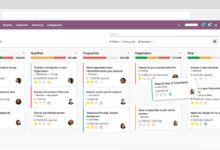
Odoo is one of the most popular Open Source ERP solutions, known for its modular design and user-friendly interface. It offers over 30 core applications, including CRM, eCommerce, accounting, and project management, all seamlessly integrated.
Key features include:
- Open source community edition (free) and enterprise edition (paid)
- Drag-and-drop app builder for custom modules
- Strong third-party app marketplace
- Active global community and extensive documentation
Odoo’s strength lies in its scalability—from startups to mid-sized enterprises. Its open architecture allows deep customization, making it ideal for businesses with unique workflows. Learn more at Odoo’s official website.
ERPNext: Built for Modern Enterprises
Developed by Frappe Technologies, ERPNext is a full-featured Open Source ERP built on the Frappe Framework. It’s designed for small to medium businesses but scales well for complex operations.
Standout capabilities:
- Real-time dashboard and analytics
- Integrated HR, payroll, and asset management
- Support for multi-currency, multi-company, and multi-language operations
- Mobile-friendly interface with offline capabilities
ERPNext is particularly praised for its clean UI and ease of implementation. It’s also highly extensible via Python and JavaScript. Visit ERPNext.com for demos and downloads.
Apache OFBiz: The Developer’s Choice
Apache OFBiz (Open For Business) is a highly flexible, Java-based Open Source ERP framework. It’s less user-friendly out of the box but offers unparalleled control for technical teams.
It excels in:
- Supply chain management
- Manufacturing and order processing
- Accounting and financial management
- Service automation
Because it’s a framework rather than a ready-to-use application, OFBiz requires significant development effort. However, this makes it perfect for organizations needing a tailor-made ERP solution. Explore it at ofbiz.apache.org.
7 Powerful Benefits of Open Source ERP
Adopting an Open Source ERP system isn’t just about saving money—it’s a strategic move that can transform how your business operates. Here are seven compelling advantages.
1. Significant Cost Savings
One of the most immediate benefits of Open Source ERP is the reduction in licensing fees. While proprietary ERPs can cost tens or hundreds of thousands of dollars, open source alternatives are often free to download and use.
Costs typically include:
- Hosting (cloud or on-premise)
- Customization and integration
- Support and training (optional)
Even with these, the total cost of ownership (TCO) is usually 50–70% lower than proprietary systems. For example, a mid-sized company might spend $50,000 on SAP over five years, while ERPNext could cost under $15,000 for a similar setup.
2. Full Customization and Flexibility
With access to the source code, businesses can modify every aspect of the ERP to fit their exact needs. Whether it’s adding a custom report, integrating with a legacy system, or automating a unique workflow, Open Source ERP gives you the freedom to adapt.
This level of flexibility is crucial for industries with specialized processes—like manufacturing, logistics, or healthcare—where off-the-shelf software often falls short.
“We customized ERPNext to handle our complex inventory rotation and expiry tracking. It would’ve cost six figures with a proprietary vendor.” — Logistics Manager, Mid-Sized Distributor
3. No Vendor Lock-In
Proprietary ERP vendors often use licensing and support contracts to keep customers dependent. Switching systems can be prohibitively expensive and technically challenging.
Open Source ERP eliminates this risk. You’re not tied to a single vendor for updates, support, or hosting. If your current provider fails to meet expectations, you can switch to another—or bring it in-house.
This freedom fosters healthy competition among service providers and keeps costs in check.
4. Faster Innovation and Updates
Open source communities are hotbeds of innovation. Developers from around the world contribute bug fixes, security patches, and new features daily.
For example, Odoo’s community releases updates every few weeks, while major versions roll out annually with significant enhancements. This rapid iteration cycle means businesses get access to cutting-edge features faster than with traditional ERP vendors, who may release updates only once or twice a year.
5. Enhanced Security and Transparency
Contrary to popular belief, open source software is often more secure than proprietary alternatives. Because the code is publicly visible, vulnerabilities are identified and patched quickly by the global developer community.
In contrast, closed-source systems rely on ‘security through obscurity,’ which can lead to undiscovered flaws persisting for years.
With Open Source ERP, you can audit the code yourself or hire a third party to do so, ensuring compliance with data protection regulations like GDPR or HIPAA.
6. Strong Community and Ecosystem Support
Every major Open Source ERP platform has a vibrant community of users, developers, and consultants. Forums, Slack channels, GitHub repositories, and user groups provide real-time support and knowledge sharing.
For instance, ERPNext has over 100,000 active users and a community forum with more than 20,000 threads. This collective intelligence accelerates problem-solving and reduces reliance on paid support.
Additionally, marketplaces for apps, themes, and integrations extend functionality without custom coding.
7. Scalability and Future-Proofing
Open Source ERP systems are designed to grow with your business. Whether you’re adding new users, expanding to new regions, or integrating with AI and IoT systems, these platforms can adapt.
For example, Odoo can start as a simple CRM for a startup and evolve into a full enterprise suite with manufacturing, POS, and eCommerce modules as the company scales.
Because you control the infrastructure and codebase, you’re not at the mercy of a vendor’s roadmap. Your ERP evolves based on your business needs, not someone else’s priorities.
Challenges and Considerations of Open Source ERP
While the benefits are substantial, Open Source ERP isn’t without its challenges. Understanding these upfront can help you avoid costly mistakes.
Implementation Complexity
Unlike plug-and-play SaaS solutions, many Open Source ERP systems require technical expertise to install, configure, and maintain. You’ll need skilled developers or consultants for:
- Server setup and database configuration
- Custom module development
- Data migration from legacy systems
- Integration with third-party tools (e.g., payment gateways, email services)
For non-technical teams, this can be a steep learning curve. However, managed hosting providers like ERPNext Cloud or Odoo.sh simplify deployment significantly.
Support and Maintenance Responsibilities
With no single vendor responsible for support, businesses must decide how to handle maintenance. Options include:
- Self-support using community forums
- Hiring in-house developers
- Engaging third-party consultants
- Purchasing premium support from official providers
While community support is often excellent, mission-critical systems may require guaranteed response times, which usually come at a cost.
Security Management
While open source code is transparent, it’s not automatically secure. You’re responsible for:
- Regular updates and patching
- Secure server configuration
- Access control and user permissions
- Backup and disaster recovery planning
Failure to manage these aspects can expose your business to cyber threats. However, with proper IT governance, Open Source ERP can be more secure than proprietary alternatives.
How to Choose the Right Open Source ERP for Your Business
Selecting the best Open Source ERP requires careful evaluation of your business needs, technical capabilities, and long-term goals.
Assess Your Business Requirements
Start by mapping out your core processes:
- Which departments need ERP integration? (Finance, HR, Sales, etc.)
- What key features are non-negotiable? (Inventory tracking, CRM, payroll)
- Do you need mobile access or offline capabilities?
- Are you operating in multiple countries or currencies?
Create a prioritized list of must-have, nice-to-have, and future requirements to guide your selection.
Evaluate Technical Compatibility
Check whether the ERP platform aligns with your existing tech stack:
- Does it run on your preferred operating system? (Linux, Windows)
- Is it compatible with your database? (PostgreSQL, MySQL)
- Can it integrate with your current tools via APIs? (e.g., Shopify, WooCommerce, QuickBooks)
- What are the hosting options? (Self-hosted, cloud, hybrid)
For example, ERPNext runs on Python and MariaDB, while Odoo uses Python and PostgreSQL. Ensure your team has the skills—or can acquire them—to manage the system.
Review Community and Commercial Support
A strong community is a good sign, but for enterprise use, consider commercial support options:
- Does the vendor offer SLA-backed support?
- Are there certified partners in your region?
- Is there regular documentation and training material?
- How active is the GitHub repository? (Check commit frequency and issue resolution)
Platforms like Odoo and ERPNext offer both free community editions and paid enterprise support, giving you flexibility as you grow.
Real-World Success Stories: Companies Using Open Source ERP
Many organizations—from startups to multinational corporations—have successfully implemented Open Source ERP to streamline operations and reduce costs.
Case Study: A Manufacturing Firm Switches to ERPNext
A mid-sized manufacturing company in Southeast Asia was using a mix of spreadsheets and legacy software to manage production, inventory, and sales. They faced delays, data silos, and inaccurate forecasting.
After evaluating several options, they chose ERPNext for its:
- Production planning and bill of materials (BOM) module
- Real-time inventory tracking
- Integration with their existing eCommerce platform
Within six months, they achieved:
- 30% reduction in inventory carrying costs
- 25% improvement in on-time delivery
- Full visibility into production bottlenecks
The total implementation cost was under $20,000—less than a tenth of what a proprietary ERP would have cost.
Case Study: Odoo Powers a Global Retail Chain
A retail chain with 50+ stores across Europe needed a unified system to manage POS, inventory, and customer data. They selected Odoo for its:
- Integrated POS and eCommerce capabilities
- Multi-warehouse management
- Customizable CRM and loyalty programs
By leveraging Odoo’s open source flexibility, they built a custom module to sync stock levels across all stores and online channels in real time.
Results included:
- 15% increase in sales due to better stock availability
- 40% reduction in manual data entry errors
- Centralized reporting for executive decision-making
They continue to extend Odoo with new apps as their business evolves.
The Future of Open Source ERP
The Open Source ERP ecosystem is evolving rapidly, driven by advancements in cloud computing, AI, and low-code development.
Integration with AI and Automation
Modern Open Source ERP platforms are beginning to incorporate AI for predictive analytics, chatbots, and intelligent process automation. For example, ERPNext now offers AI-powered sales forecasting, while Odoo uses machine learning to optimize inventory levels.
Because the code is open, developers can train models on proprietary data without vendor restrictions, leading to more accurate and relevant insights.
Cloud-Native and SaaS Models
While open source traditionally favored on-premise deployment, cloud-native versions are gaining traction. Platforms like Odoo.sh and ERPNext Cloud offer managed, scalable environments with automatic backups and updates.
This hybrid model combines the freedom of open source with the convenience of SaaS, making it accessible to non-technical users.
Low-Code and No-Code Expansion
To lower the barrier to entry, many Open Source ERP systems are introducing drag-and-drop builders and visual workflow designers. Odoo Studio, for instance, allows users to create custom apps without writing code.
This trend will empower business analysts and department heads to build solutions tailored to their needs, reducing dependency on IT teams.
What is Open Source ERP?
Open Source ERP is an enterprise resource planning system with publicly available source code, allowing businesses to use, modify, and distribute the software freely. It integrates core business functions like finance, HR, and inventory management.
Is Open Source ERP secure?
Yes, often more secure than proprietary systems due to transparent code and rapid community-driven patching. However, security depends on proper configuration and maintenance by the user.
Can Open Source ERP scale with my business?
Absolutely. Platforms like Odoo and ERPNext are designed to scale from small businesses to large enterprises, with modular architectures that grow with your needs.
Do I need developers to use Open Source ERP?
For basic setups, no. Managed cloud services offer easy deployment. However, customization and complex integrations typically require technical expertise or consultant support.
How much does Open Source ERP cost?
The software itself is often free. Costs include hosting, customization, training, and optional support. Total costs are typically 50–70% lower than proprietary ERP systems.
Open Source ERP is more than just a cost-saving alternative—it’s a strategic enabler of agility, innovation, and long-term control. From Odoo to ERPNext, powerful platforms are making enterprise-grade software accessible to businesses of all sizes. While challenges like implementation complexity exist, the benefits of customization, security, and freedom from vendor lock-in far outweigh them. As AI, cloud, and low-code tools integrate into these systems, the future of Open Source ERP looks brighter than ever. The smart move? Start exploring now—before your competitors do.
Recommended for you 👇
Further Reading:
